





Organic protein powder has become a popular choice for people who want more control over the ingredients and sourcing of their daily nutrition. But does the organic label actually make a protein powder better?
The answer depends on what you mean by better. Organic certification tells you how agricultural ingredients are produced, handled, and labeled. It does not automatically mean a product contains more protein, has a superior amino acid profile, or will produce better results from exercise.
Research does suggest that organic food consumption can reduce exposure to certain pesticides, while evidence for broader nutritional advantages is less conclusive. For that reason, choosing an organic protein powder is best viewed as one part of a larger decision that also includes protein source, protein content, ingredients, testing, taste, dietary preferences, and price.
Organic Protein Powder
Organic protein powder is a protein supplement made with agricultural ingredients that meet applicable organic production and handling standards. In the United States, those standards are established through the USDA National Organic Program.
The USDA explains that products labeled “organic” must contain at least 95% certified organic ingredients, excluding water and salt. Products labeled “made with organic ingredients” must contain at least 70% organic ingredients and cannot display the USDA organic seal.
This distinction matters when comparing products on a store shelf. A protein powder may contain individual organic ingredients without qualifying as an organic product under the USDA labeling categories.
The organic label therefore provides useful information about sourcing and production, but it does not tell you everything about the nutritional value of the finished protein powder. Protein amount, protein source, amino acid composition, and the rest of the ingredient list still need to be considered.
What Makes Protein Powder Organic?
For a protein powder to carry a USDA organic claim, the agricultural ingredients and handling processes must meet the applicable organic standards. The rules cover areas such as crop production, livestock production, processing, handling, and permitted substances.
The USDA also explains that organic crop production restricts prohibited substances and requires specific management practices. For example, land used for organic crops must not have prohibited substances applied for at least three years before harvest.
That gives the word “organic” a specific meaning that goes beyond general marketing language. It also explains why a certified organic protein powder can be meaningfully different in terms of ingredient sourcing.
At the same time, organic certification is not a nutritional score. A protein powder can meet organic requirements and still have a different protein concentration, amino acid profile, flavor, or formulation from another organic product.
Organic vs Regular Protein Powder
When comparing organic vs regular protein powder, the most useful approach is to separate sourcing from nutrition.
Organic certification primarily tells you about how ingredients are produced and handled. Protein quality depends on the protein source, essential amino acid profile, digestibility, and amount consumed. These factors apply whether the protein powder is organic or conventional.
For example, an organic pea protein powder and a conventional pea protein powder are still based on the same type of protein. The organic certification does not automatically make one a better source of essential amino acids.
The same applies when comparing organic plant protein with organic whey protein. Their protein sources are fundamentally different, so their amino acid profiles and nutritional characteristics can differ regardless of organic certification.
This makes the comparison more practical. If organic sourcing is important to you, certification is worth considering. If your priority is protein intake, compare the grams of protein per serving. If you follow a vegan or dairy-free diet, check the protein source. If you want to avoid artificial sweeteners, read the ingredient list.
What USDA Organic Certification Actually Covers
USDA Organic certification is designed to verify compliance with specific organic standards. It is not intended to certify a product as nutritionally superior in every respect.
The USDA National Organic Program establishes standards for organic production, handling, labeling, and enforcement. Certified operations must follow the applicable regulations, and accredited certifiers verify compliance.
This is important because consumers sometimes use “organic” as shorthand for a much broader claim about health, safety, nutrition, and ingredient quality. Those are separate questions.
A certified organic protein powder can be an excellent product, but its quality still depends on the finished formula. The certification gives you confidence about a particular set of production standards. It does not tell you how much protein you will get in a serving or whether the powder has been independently tested for heavy metals.
Organic Protein Powder and Pesticide Exposure
One of the strongest reasons people choose organic food is to reduce exposure to certain agricultural pesticides. This is an area where research provides a more specific point of comparison than simply saying organic food is healthier.
A systematic review and meta-analysis published in Advances in Nutrition examined 23 observational studies and 27 interventional studies involving organic food consumption. The researchers found a beneficial association between organic food intake and pesticide exposure biomarkers. However, evidence for associations with individual diseases was considered insufficient for several outcomes because of limitations in the available research.
That finding gives organic sourcing a legitimate reason for consideration. It also shows why the discussion needs to remain precise.
The research does not demonstrate that switching from conventional protein powder to organic protein powder will automatically improve someone's health. Instead, it supports the narrower conclusion that organic food consumption can be associated with lower exposure to certain pesticides.
For consumers who place importance on agricultural sourcing, that distinction can still be meaningful.
Does Organic Protein Powder Have More Nutrients?
Organic protein powder is not automatically more nutritious simply because it is organic.
A systematic review published in the European Journal of Clinical Nutrition examined evidence comparing organic and conventional food consumption. The researchers found that evidence concerning differences in nutrient value was inconclusive, while clinical trials consistently indicated lower pesticide exposure among people consuming organic diets.
This matters when evaluating organic protein powder nutrition. If two products provide similar amounts of protein, the organic label alone does not establish that one contains more usable protein or a better amino acid profile.
The same principle applies to vitamins and minerals. Unless the product's nutrition facts show a meaningful difference, the organic certification itself should not be treated as evidence that the powder supplies more nutrients.
In other words, organic certification and nutritional composition answer different questions. Looking at both gives you a much clearer picture of what you are actually buying.
Protein Quality Still Matters
Protein quality is one of the most important considerations when choosing a protein powder, and it deserves attention whether the product is organic or conventional.
Different protein sources provide different proportions of essential amino acids. Whey protein, for example, has a different amino acid profile from pea protein, soy protein, rice protein, or seed-based proteins. Digestibility can also vary between sources and formulations.
For people who exercise regularly, total protein intake matters as well. The International Society of Sports Nutrition states that most exercising individuals can benefit from approximately 1.4 to 2.0 grams of protein per kilogram of body weight per day.
That recommendation does not suggest that organic protein is superior for muscle growth. Instead, it highlights why the protein itself remains central to the decision.
A protein powder that provides a useful amount of protein and fits your dietary needs may be more relevant to your goals than whether the word “organic” appears on the front of the package.
Organic Plant Protein Powder
Organic plant protein powder can be especially appealing to people who want plant-based nutrition while also prioritizing organic ingredient sourcing.
Plant protein powders can be made from sources such as pea, soy, rice, hemp, pumpkin seed, and chia. These ingredients differ in their amino acid profiles, texture, digestibility, and role in a finished formula.
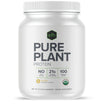
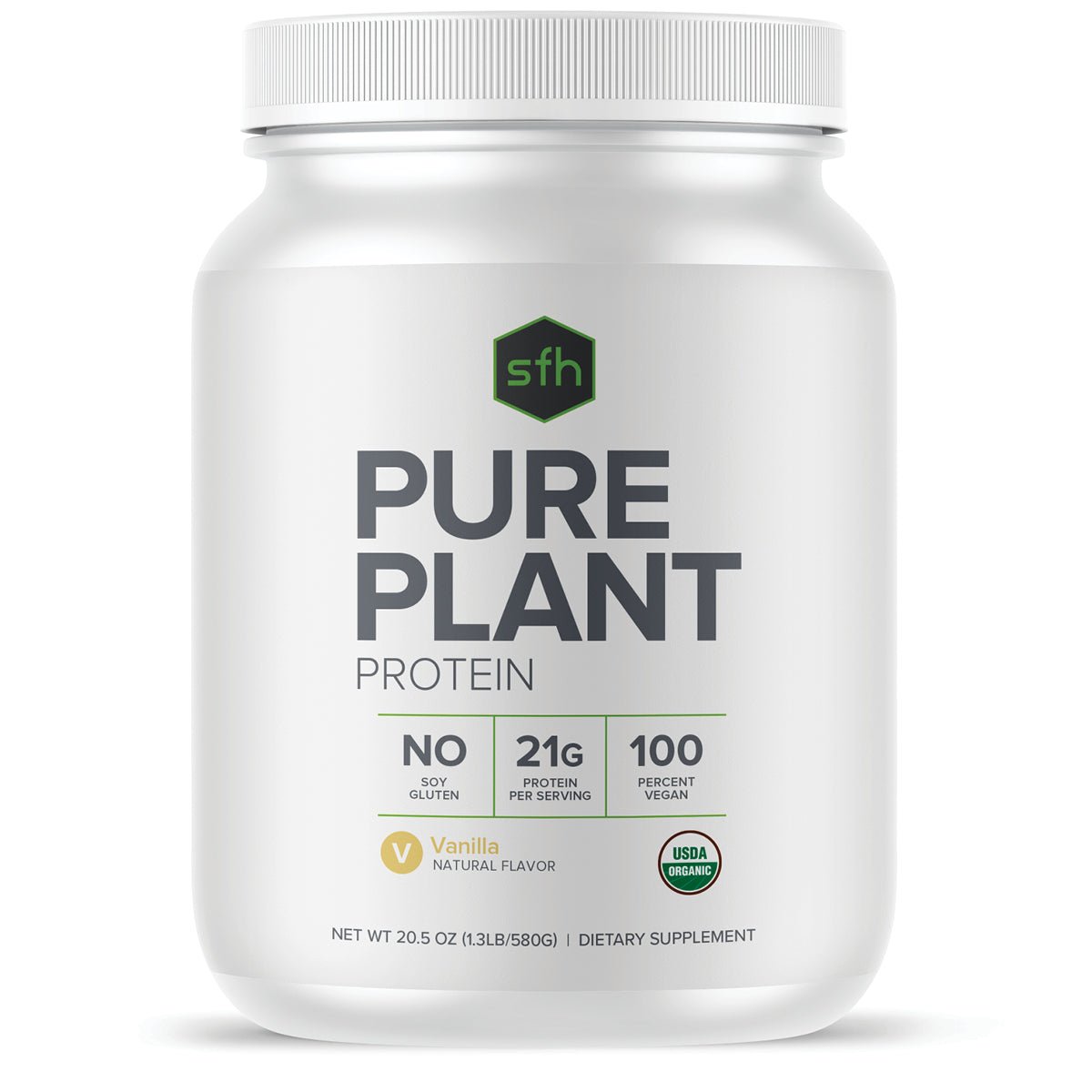
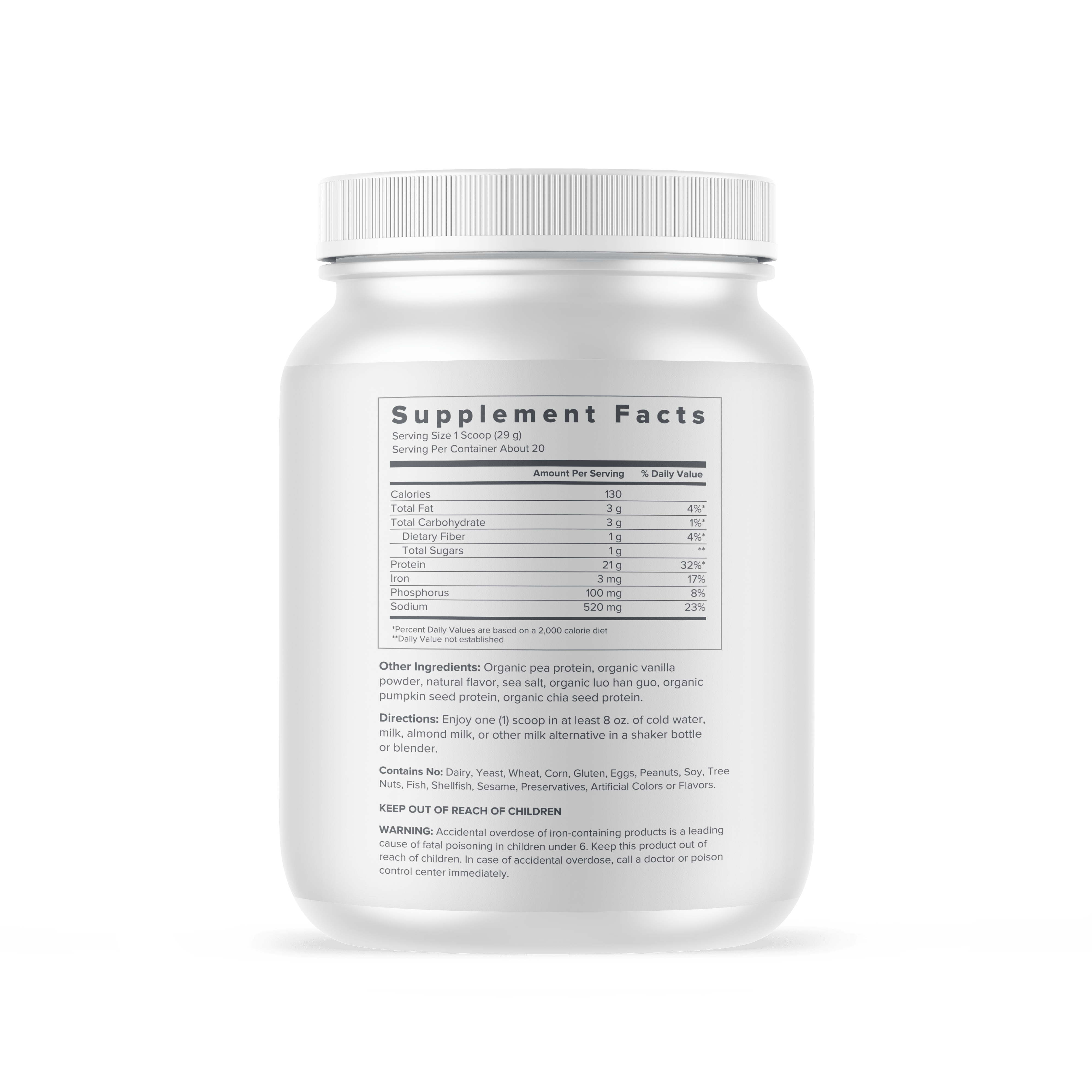
This is where a product such as SFH Pure Plant can fit naturally into the conversation. It combines organic pea, pumpkin seed, and chia seed proteins in one plant-based formula, giving consumers a way to include multiple plant protein sources in their routine.
The point is not that organic certification automatically makes a plant protein superior. Rather, it allows someone who values organic sourcing to combine that preference with a plant-based protein formula.
Organic Protein Powder Ingredients
The ingredient list remains one of the most useful tools for evaluating a protein powder.
Start with the main protein source, then look at the remaining ingredients. Consider the sweetener, flavoring, thickeners, oils, and other additions. This becomes especially important if you have specific dietary preferences.
For example, someone searching for a clean organic protein powder may want a straightforward ingredient list. Someone avoiding artificial sweeteners may have a different priority. Someone following a dairy-free diet needs to make sure the protein source does not come from milk.
The word “organic” does not eliminate the need to read the label. In fact, understanding the complete ingredient list makes the organic claim more useful because you can see exactly what the finished product contains.
Organic Protein Powder and Artificial Sweeteners
Organic certification and sweetener choice are separate considerations.
An organic protein powder can be sweetened, unsweetened, or formulated with different types of sweeteners. Therefore, someone looking specifically for organic protein powder without artificial sweeteners should still check the ingredient list.
A naturally sweetened option can be a practical middle ground for people who want a flavored shake but prefer not to use artificial sweeteners. SFH Pure Plant, for example, uses organic monk fruit to provide sweetness rather than relying on artificial sweeteners.
That detail matters because the goal is not simply to find an organic product. It is to find a formula that fits your preferences across several dimensions, including protein source, sweetness, ingredients, and sourcing.
Does Organic Protein Powder Have Fewer Contaminants?
Organic certification should also not be confused with independent contaminant testing.
An organic label provides information about organic production and handling standards. It does not automatically mean that the finished protein powder has been independently tested for every heavy metal or contaminant.
This distinction is particularly relevant because protein powders can vary in their heavy metal content. Consumer Reports tested 23 protein powders and shakes and found that more than two-thirds contained more lead in a single serving than its food safety experts considered safe to consume in a day. Some products also contained concerning levels of cadmium or inorganic arsenic.
These results should not be interpreted as proof that every protein powder contains harmful levels of heavy metals, nor do they establish that organic products are safer or less safe than conventional products.
They do, however, demonstrate why organic certification should not be treated as a substitute for finished-product testing.
Third-Party Testing for Protein Powder
Third-party testing can provide another layer of information about a protein powder.
Depending on the testing program, a product may be evaluated for heavy metals, microbial contamination, banned substances, or other quality specifications. The important point is to understand what was tested and what the results actually show.
For someone who uses protein powder frequently, this can be an important part of evaluating a product. Organic certification answers questions about organic production. Nutrition facts answer questions about protein and calories. Ingredient lists show what is included. Independent testing can address specific quality or contamination concerns.
Together, these pieces provide a more complete picture than any single label claim.
Is Organic Protein Powder Worth the Extra Cost?
Whether organic protein powder is worth the extra cost depends largely on your priorities.
If certified organic sourcing matters to you, paying more may be worthwhile because you are choosing a specific production standard. If your main goal is simply to increase your protein intake as affordably as possible, a conventional product may meet your needs without the additional cost.
It is also important to compare value rather than price alone. Look at the protein amount per serving, serving size, ingredient list, and how well the product fits your diet.
Taste and convenience matter too. A protein powder that works well with your daily routine and that you actually enjoy using can provide more practical value than a product chosen solely because it has an organic label.
For someone who values organic plant-based nutrition, SFH Pure Plant offers a combination of organic sourcing and multiple plant protein sources, making it an option worth considering within that broader evaluation.
How to Choose an Organic Protein Powder
Choosing an organic protein powder becomes much easier when you evaluate the product in a consistent order.
First, verify the organic certification and understand what the certification category means. Next, check the amount of protein per serving and identify the primary protein sources.
Then read the entire ingredient list. Look at sweeteners, flavors, and other additions rather than relying only on front-of-package claims. If you follow a vegan or dairy-free diet, confirm that the protein source matches your requirements.
Finally, consider whether the manufacturer provides meaningful quality or testing information. You do not need to treat one certification as proof that a product is perfect. Instead, consider how the different pieces of information fit together.
That approach makes it easier to compare organic protein powders based on what actually matters to you.
Frequently Asked Questions
Is organic protein powder better?
Organic protein powder can be a better fit for people who prioritize certified organic sourcing. However, organic certification does not automatically mean better protein quality, more nutrients, or better exercise results.
Is organic protein powder healthier?
Research suggests that organic food consumption can reduce exposure to certain pesticides. However, current evidence does not establish that organic protein powder is universally healthier than conventional protein powder.
Is organic protein powder worth it?
It can be worth the additional cost if organic sourcing is important to you. Protein content, ingredients, testing, taste, and price should also be considered.
Does organic protein powder have more nutrients?
Not necessarily. Organic certification does not guarantee more protein, vitamins, minerals, or essential amino acids. The nutrition facts and protein source provide more direct information.
Is USDA Organic the same as third-party tested?
No. USDA Organic certification concerns organic production and handling standards. Third-party testing can evaluate separate characteristics, such as heavy metals or other contaminants.
Wrap Up
So, is organic protein powder better? It can be a better choice when certified organic sourcing is important to you, but organic certification should not be treated as a universal measure of nutritional quality.
The strongest evidence points to a meaningful difference in agricultural practices and, in research on organic diets, lower exposure to certain pesticides. It does not establish that organic protein powder automatically contains more nutrients or provides superior protein quality.
Those factors depend on the protein source, amount per serving, amino acid profile, ingredients, and formulation. Testing is another separate consideration because organic certification does not replace independent evaluation of the finished product. For people who prefer organic plant-based nutrition, SFH Pure Plant brings multiple organic plant protein sources into one convenient formula, while its organic monk fruit provides a naturally sweetened option. The better protein powder is the one that fits your nutritional requirements, dietary preferences, ingredient priorities, budget, and everyday routine.

Leave a comment
This site is protected by hCaptcha and the hCaptcha Privacy Policy and Terms of Service apply.