







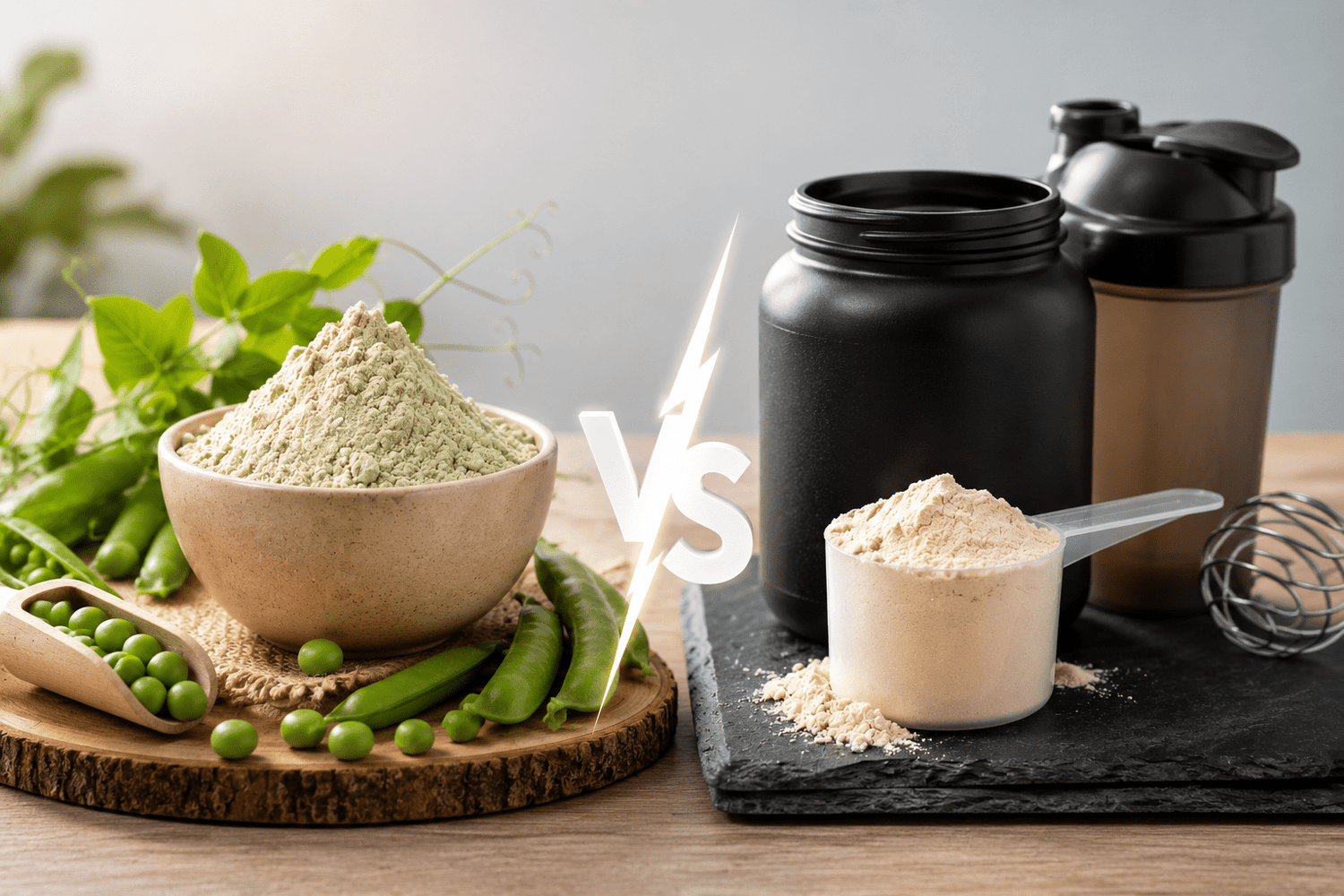
Choosing between pea protein and whey protein is no longer just a fitness decision. It is a lifestyle choice that depends on your dietary preferences, digestive health, wellness goals, and daily routine. While both protein sources can help support muscle recovery and overall nutrition, they offer different advantages that appeal to different people. Some shoppers want a dairy-free option that fits a plant-based lifestyle, while others prioritize rapid absorption after workouts.
Understanding how these proteins compare can help you make a confident purchase instead of relying on marketing claims. This guide explores the key differences between pea protein and whey protein, explains who each option is best suited for, and highlights the factors that matter most before adding a protein powder to your daily routine.
What Is Pea Protein?
Pea protein is a plant-based protein made from yellow split peas. It has become one of the most popular alternatives to dairy-based protein because it provides a high amount of protein while remaining suitable for vegans, vegetarians, and people with lactose intolerance. Modern pea protein powders are carefully processed to concentrate the protein while reducing carbohydrates and fats, creating a convenient supplement for everyday use.
Although pea protein was once viewed as inferior to animal-based proteins, research has shown that high-quality formulations can effectively support muscle development and recovery when consumed as part of a balanced diet. Many products also combine pea protein with complementary plant proteins to provide a more complete amino acid profile.
A 2015 study published in the Journal of the International Society of Sports Nutrition found that participants supplementing with pea protein experienced significant improvements in muscle thickness following resistance training, with results comparable to whey protein in many measures.
Pea protein also appeals to shoppers looking for cleaner ingredient labels and dairy-free nutrition. For individuals following a plant-based lifestyle or managing lactose sensitivity, choosing a quality pea protein powder can provide consistent daily protein without dairy-related concerns.
What Is Whey Protein?
Whey protein is produced during the cheese-making process and is widely recognized as one of the highest-quality protein sources available. Because it naturally contains all nine essential amino acids, it is considered a complete protein and has long been a favorite among athletes and gym enthusiasts.
One of whey protein's greatest strengths is its leucine content. Leucine is an essential amino acid that plays an important role in stimulating muscle protein synthesis after exercise. Whey is also rapidly digested, making it a practical choice for people who want quick protein delivery after workouts.
According to the International Society of Sports Nutrition, consuming approximately 20 to 40 grams of high-quality protein per serving, or about 0.25 grams per kilogram of body weight, helps maximize muscle protein synthesis for most active adults.
Despite these advantages, whey protein is not suitable for everyone. Individuals with lactose intolerance, dairy allergies, or those following vegan diets often seek alternatives that better align with their nutritional preferences and digestive comfort.
Pea Protein vs Whey Protein: Key Differences
Protein Source and Dietary Fit
The biggest difference between pea protein and whey protein is where they come from. Whey is derived from milk, making it unsuitable for vegans and many people with dairy allergies or lactose intolerance. Pea protein, on the other hand, is entirely plant based and offers a practical solution for anyone looking to avoid dairy without sacrificing protein intake.
For shoppers who prioritize clean ingredients and follow a dairy free lifestyle, SFH PURE PLANT is a natural option to consider. Its plant-based formula is designed for people who want quality protein while remaining mindful of lactose and animal-derived ingredients.
Amino Acids and Muscle Support
Both protein sources provide essential amino acids, but they differ slightly in composition. Whey naturally contains higher amounts of leucine, an amino acid closely associated with muscle protein synthesis. Pea protein contains slightly less leucine, yet quality pea protein products still deliver strong muscle support when total daily protein intake is sufficient.
A 2019 study published in Sports compared pea protein and whey protein during resistance training and found similar improvements in body composition, muscle thickness, strength, force production, and workout performance.
This finding suggests that most active adults can achieve excellent results with either protein source when combined with consistent training and balanced nutrition. Instead of asking which protein is universally better, it is often more useful to ask which one better matches your lifestyle and dietary preferences.
Digestion and Lactose Sensitivity
Digestive comfort is another important factor when choosing a protein powder. Whey protein is generally well tolerated by many people, especially whey isolate, which contains less lactose than whey concentrate. However, some individuals still experience bloating or digestive discomfort after consuming dairy-based protein.
Pea protein is naturally free from lactose, making it an appealing choice for people with lactose intolerance or anyone who simply feels better avoiding dairy products. It also fits vegan and vegetarian eating patterns without requiring dietary compromises.
According to the U.S. Food and Drug Administration, dietary supplements are not reviewed for safety and effectiveness before they are marketed, making it important to choose products from companies that emphasize quality ingredients and transparent manufacturing practices.
Ingredients and Clean Label Preferences
Many shoppers now read ingredient labels as carefully as nutrition facts. A shorter ingredient list with recognizable components often reflects a cleaner formulation than products loaded with artificial flavors, unnecessary fillers, or excessive sweeteners.
If a clean label is one of your priorities, SFH PURE PLANT is well suited for dairy-free, plant-based, lactose-conscious users who want a straightforward protein supplement without unnecessary complexity. Regardless of whether you choose pea protein or whey protein, selecting a product with transparent labeling and quality ingredients will give you greater confidence in your daily nutrition.
Which Protein Is Better for Your Goal?
The answer depends on what matters most to you. If your priority is maximizing post-workout protein intake and you tolerate dairy well, whey protein is an excellent choice. Its complete amino acid profile and naturally high leucine content make it a reliable option for supporting muscle recovery after resistance training.
If your lifestyle centers on plant-based eating, avoiding dairy, or managing lactose intolerance, pea protein may be the better fit. Modern pea protein formulas provide high-quality nutrition while supporting everyday wellness, strength training, and active living.
A 2024 study published in The American Journal of Clinical Nutrition found that both supplemental whey protein and pea protein increased integrated muscle protein synthesis compared with consuming only the recommended dietary allowance for protein. This suggests that either protein source can effectively support muscle health when paired with an overall nutritious diet.
Rather than searching for a single winner, think about which protein aligns with your eating habits, digestive comfort, and long-term goals. Consistency is far more important than choosing a product simply because it is popular.
Who Should Choose Pea Protein?
Pea protein is an excellent option for vegans, vegetarians, people with lactose intolerance, and anyone looking for a dairy-free supplement. It also appeals to shoppers who prefer clean-label products and want to reduce their reliance on animal-based ingredients. When paired with a balanced diet, pea protein can support muscle maintenance, exercise recovery, and daily protein intake just as effectively as many traditional supplements.
Who Should Choose Whey Protein?
Whey protein is well suited for people who consume dairy comfortably and want a fast-digesting protein source after exercise. It remains a trusted choice for athletes, strength trainers, and anyone seeking a complete protein with an established research history. Selecting a product with transparent ingredients and third-party quality testing helps ensure you receive the nutritional benefits you expect.
Quick Buyer's Checklist
Before purchasing your next protein powder, ask yourself these questions:
· Does it fit your dietary lifestyle?
· Is the protein source clearly identified?
· Does it provide adequate protein per serving?
· Is the ingredient list simple and transparent?
· Has the manufacturer invested in quality testing?
According to the U.S. Food and Drug Administration, reviewing supplement labels carefully and purchasing from reputable manufacturers are important steps because dietary supplements are not approved before they are marketed.
Frequently Asked Questions
Is pea protein as effective as whey protein for building muscle?
Yes. Research shows pea protein can support muscle growth and strength when total daily protein intake and resistance training are adequate.
Is pea protein easier to digest than whey?
Many people with lactose intolerance or dairy sensitivity find pea protein easier to digest because it naturally contains no lactose.
Which protein is better for weight management?
Both can support weight management by increasing protein intake and promoting fullness. The best choice depends on your dietary preferences and overall eating habits.
Can I switch from whey protein to pea protein?
Yes. Many people transition successfully, especially if they want a dairy-free or plant-based alternative without compromising daily protein intake.
Conclusion
The debate between pea protein vs whey protein does not have a universal winner because the best option depends on your lifestyle. Whey protein offers fast digestion and a complete amino acid profile for people who consume dairy comfortably. Pea protein provides an excellent alternative for those seeking plant-based nutrition, lactose-free digestion, and clean ingredients. By considering your dietary preferences, fitness goals, ingredient expectations, and digestive needs, you can confidently choose the protein powder that fits your routine and supports your long-term health.

Leave a comment
This site is protected by hCaptcha and the hCaptcha Privacy Policy and Terms of Service apply.