

Beta-alanine and creatine are two of the most recognized ingredients in sports nutrition, but they are often compared as though they perform the same job. They do not. Beta-alanine helps increase muscle carnosine, which supports the muscles’ ability to buffer acidity during demanding exercise. Creatine works through a different energy system by increasing the availability of creatine and phosphocreatine, which help regenerate ATP during short, powerful efforts. This difference matters when deciding which supplement fits your training goals.
Someone focused on strength and muscle gain may have different priorities from someone performing repeated high-intensity intervals. The good news is that choosing one does not necessarily mean rejecting the other. They can serve different purposes and can even be used together. The more useful question is not simply whether beta-alanine or creatine is better, but which one is better suited to the type of training you actually do and the results you want to achieve consistently.
What Is the Difference Between Beta-Alanine and Creatine?
The simplest way to understand beta-alanine vs. creatine is to look at what each one does inside muscle.
Beta-alanine is a precursor to carnosine. Carnosine is stored in skeletal muscle and contributes to the buffering of hydrogen ions that accumulate during intense exercise. When exercise becomes sufficiently demanding, the muscle environment becomes more acidic, which can contribute to fatigue. Having more carnosine available may help the muscle handle that change for longer.
Creatine has a different role. It increases the amount of creatine stored in muscle, including phosphocreatine. During intense muscular contractions, phosphocreatine can help regenerate ATP quickly. ATP is the immediate energy currency used for muscle contraction, so having more phosphocreatine available can support repeated high-intensity efforts.
According to a 2026 network meta-analysis covering 52 randomized controlled trials, creatine showed significant benefits across several high-intensity performance measures, including sprint performance, jumping, repeated-sprint ability, and upper-body muscular endurance. Beta-alanine showed a more context-dependent pattern of benefits, while combining the two did not consistently produce an additional advantage over creatine alone.
The distinction becomes much easier once you stop viewing these supplements as direct competitors. They influence different parts of exercise physiology.
What Does Beta-Alanine Do?
Beta-alanine is mainly used to increase muscle carnosine levels.
When you consume beta-alanine consistently, your body uses it to help produce more carnosine inside skeletal muscle. During hard exercise, carnosine contributes to buffering hydrogen ions. This is particularly relevant during high-intensity efforts where fatigue can become strongly influenced by the accumulation of metabolic byproducts.
That makes beta-alanine more interesting for certain forms of training than others. It is not primarily an energy supplement, and it does not work like caffeine. You do not need to feel energized immediately after taking it for it to be doing its intended job.
A 2024 systematic review and meta-analysis examining 18 studies involving 331 trained young men found that beta-alanine improved maximal-intensity exercise performance overall. The researchers found particularly favorable results after four weeks of supplementation, during exercise lasting four to 10 minutes, and with daily intakes between 5.6 and 6.4 grams. That makes beta-alanine particularly relevant when training includes hard efforts that last long enough for buffering capacity to become important.
What Does Creatine Do?
Creatine supports the body's rapid energy system. Your muscles naturally store creatine, with much of it existing as phosphocreatine. When you perform an explosive movement, heavy set, sprint, or another short high-intensity effort, your muscles need ATP quickly. Phosphocreatine helps regenerate ATP, allowing muscular contractions to continue.
Supplementing with creatine can increase the amount of creatine stored in muscle. This is why creatine is particularly well established in resistance training, strength, power, and repeated high-intensity exercise.
Creatine is also different from a stimulant. You do not have to feel a noticeable sensation for it to work. Its benefits come from maintaining higher muscle creatine stores over time.
A 2024 systematic review and meta-analysis of 12 studies found that adding creatine to resistance training increased lean body mass by an average of 1.14 kilograms compared with resistance training alone. The researchers also observed reductions in body-fat percentage and fat mass. For someone whose main goal is building strength and lean mass through resistance training, that evidence makes creatine particularly relevant.
Is Creatine Better Than Beta-Alanine?
Creatine is generally the stronger choice if your main priorities are strength, power, repeated high-intensity performance, and muscle growth alongside resistance training.
That does not make beta-alanine ineffective. It simply reflects the different ways these supplements work.
Creatine directly supports the phosphocreatine energy system, which is heavily involved when you need to produce force quickly. Beta-alanine supports muscle buffering, which becomes more relevant as intense exercise continues and acidity becomes a greater challenge.
For example, someone performing heavy sets of squats, bench presses, or deadlifts may place a high priority on creatine. Someone performing repeated hard intervals or sustained high-intensity efforts may have a different reason to consider beta-alanine. The best choice therefore depends on what your training actually demands.
Is Beta-Alanine Better Than Creatine?
Beta-alanine can be the more targeted option for certain high-intensity activities, but it is difficult to argue that it is broadly better than creatine. Its strength is its specificity. Increasing muscle carnosine can be useful when the exercise involves enough intensity and duration for buffering to become a limiting factor.
A 2025 systematic review examining beta-alanine supplementation in strength and power settings found that results were inconsistent overall. The researchers reported that daily intakes between four and 6.4 grams, particularly when divided into smaller servings, appeared more likely to produce favorable outcomes in certain training situations.
That makes beta-alanine worth considering for the right type of training, but it should not be presented as a substitute for creatine when strength and lean-mass support are the primary goals.
Which Is Better for Muscle Growth, Beta-Alanine or Creatine?
Creatine has the clearer advantage when muscle growth is the main goal.
Resistance training remains the primary stimulus for building muscle, while nutrition, recovery, and overall training quality all contribute to the process. Creatine can complement that training by supporting high-intensity performance and has a substantial evidence base for increasing lean body mass when used alongside resistance exercise.
Beta-alanine works differently. If it helps someone maintain performance during certain demanding sessions, that may support productive training over time. However, it is not generally considered a direct muscle-building supplement in the same sense as creatine.
This is an important distinction when choosing supplements. A product can improve an aspect of training without directly increasing muscle tissue. Beta-alanine's potential value comes largely through exercise performance, while creatine has a much stronger relationship with both performance and resistance-training-related gains in lean mass.
Which Is Better for Strength, Beta-Alanine or Creatine?
For strength, creatine generally has the stronger evidence.
Heavy strength training places substantial demands on the phosphocreatine system because muscles need to produce force rapidly. Increasing available creatine and phosphocreatine can support that energy requirement.
Beta-alanine may become useful in workouts that combine strength with higher training volume, shorter rest periods, or repeated demanding efforts. In those situations, buffering may become more relevant. But that is different from directly supporting the energy demands of a maximal or near-maximal contraction.
This is why someone training primarily for powerlifting or maximal strength would generally have a stronger reason to prioritize creatine, while someone whose training includes repeated high-intensity work may find beta-alanine useful as an additional option.
Which Is Better for Endurance, Beta-Alanine or Creatine?
Neither supplement should automatically be described as an endurance supplement.
The answer depends heavily on what kind of endurance you mean. Long, steady aerobic activity creates different demands from sports that involve repeated sprints, attacks, climbs, or changes in pace.
Beta-alanine may have more relevance when endurance activities include sustained high-intensity efforts where muscle buffering becomes important. Creatine can be useful when endurance sports repeatedly require short bursts of power.
A 2026 scoping review examining creatine supplementation in endurance and mixed-sport settings found that favorable findings were most commonly associated with repeated-sprint performance and high-intensity power, while evidence for broader aerobic outcomes remained limited and inconsistent.
So the athlete's sport matters just as much as the supplement label.
Can You Take Beta-Alanine and Creatine Together?
Yes, beta-alanine and creatine can be taken together.
Their different mechanisms make the combination reasonable because they are not simply competing for the same physiological pathway. Creatine supports rapid ATP regeneration, while beta-alanine increases muscle carnosine and buffering capacity.
However, taking both does not automatically mean you will receive twice the benefit.
A 2025 systematic review of seven randomized controlled trials involving 263 participants found that combining creatine and beta-alanine improved some high-intensity outcomes, particularly anaerobic power and repeated-bout performance. However, the combination did not improve maximal strength beyond creatine alone, and the evidence did not show clear additional benefits for aerobic endurance or body composition.
That makes the combination more of a complementary strategy than a guaranteed performance shortcut.
How Much Beta-Alanine Should You Take?
Beta-alanine is generally taken consistently rather than only on workout days.
The International Society of Sports Nutrition has reported that four to six grams per day for at least two to four weeks can increase muscle carnosine and improve performance in certain high-intensity activities.
Because beta-alanine works by gradually increasing muscle carnosine, taking it only immediately before a workout is not necessary for the underlying effect. Dividing the daily amount into smaller servings can also make the supplement easier to tolerate.
The appropriate amount can depend on the individual and the product, so following the product's directions is sensible rather than treating one research protocol as a universal prescription.
How Much Creatine Should You Take?
Creatine can be used through either a loading approach or a steady daily approach.
A loading strategy uses a higher amount for a short period to increase muscle creatine stores more quickly. A lower daily amount can achieve a similar goal over a longer period.
A classic controlled study found that consuming 20 grams of creatine per day for six days increased muscle creatine stores rapidly, while three grams per day produced a similar increase more gradually over approximately 28 days.
This means a loading phase is an option, not a requirement. For many people, taking a consistent daily amount is simpler and easier to maintain.
Does Beta-Alanine Make You Tingle?
Yes. Beta-alanine is well known for causing a temporary tingling sensation called paresthesia.
The sensation can feel like pins and needles, warmth, itching, or prickling on the skin. It can be noticeable after larger single servings, which is one reason divided doses are often used.
The sensation is not the same thing as an energy boost. It is a recognizable effect associated with beta-alanine itself.
Creatine does not typically produce this characteristic tingling sensation. Therefore, if a pre-workout contains both ingredients and you experience the familiar beta-alanine tingling, the beta-alanine is the more likely explanation.
Which Is Better for Pre-Workout, Beta-Alanine or Creatine?
Neither beta-alanine nor creatine should be judged like a stimulant.
Both are primarily useful through consistent supplementation and physiological changes that develop over time. Beta-alanine works by increasing muscle carnosine, while creatine increases muscle creatine availability.
That means their presence in a pre-workout does not necessarily mean they are responsible for an immediate feeling of energy.
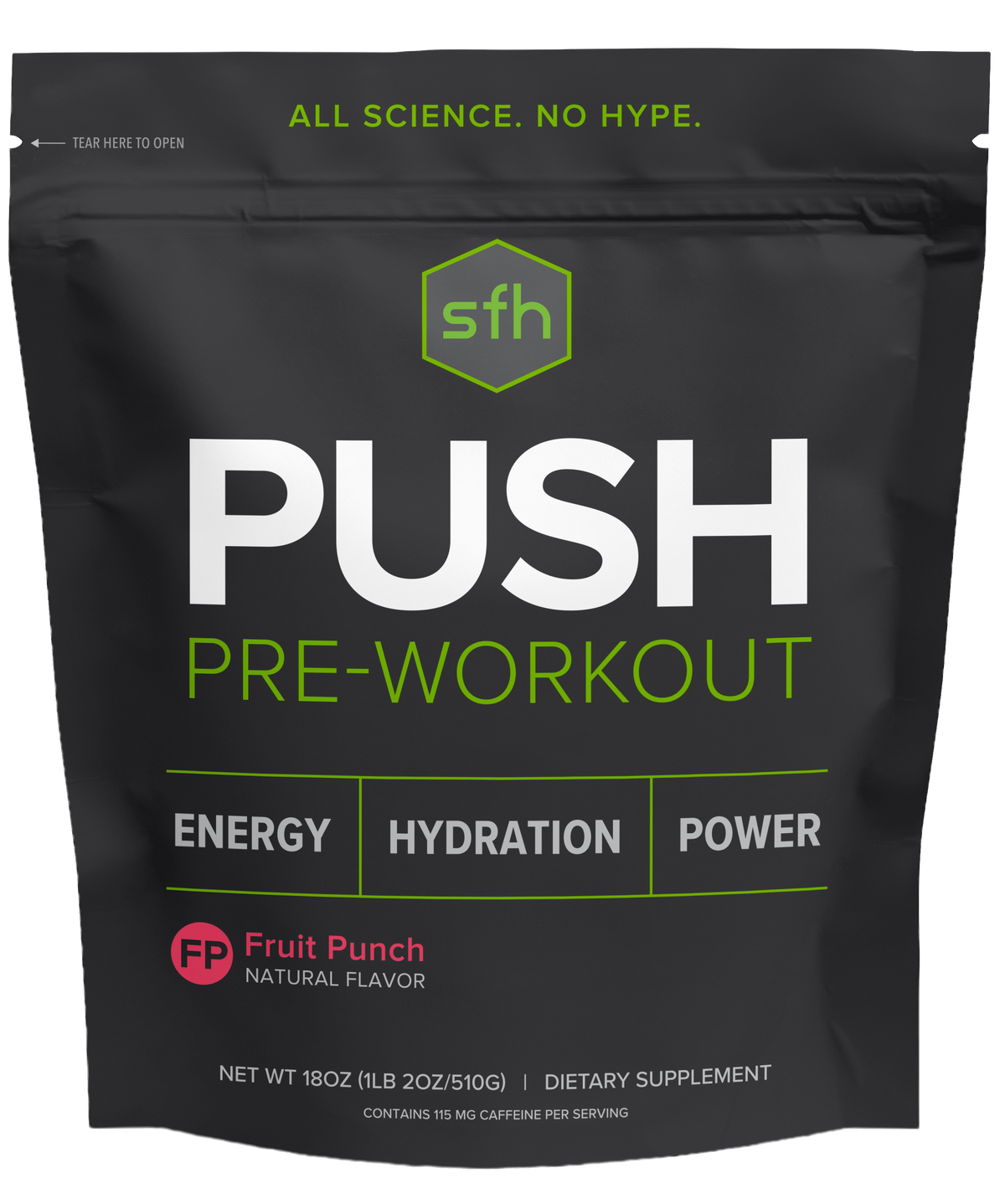
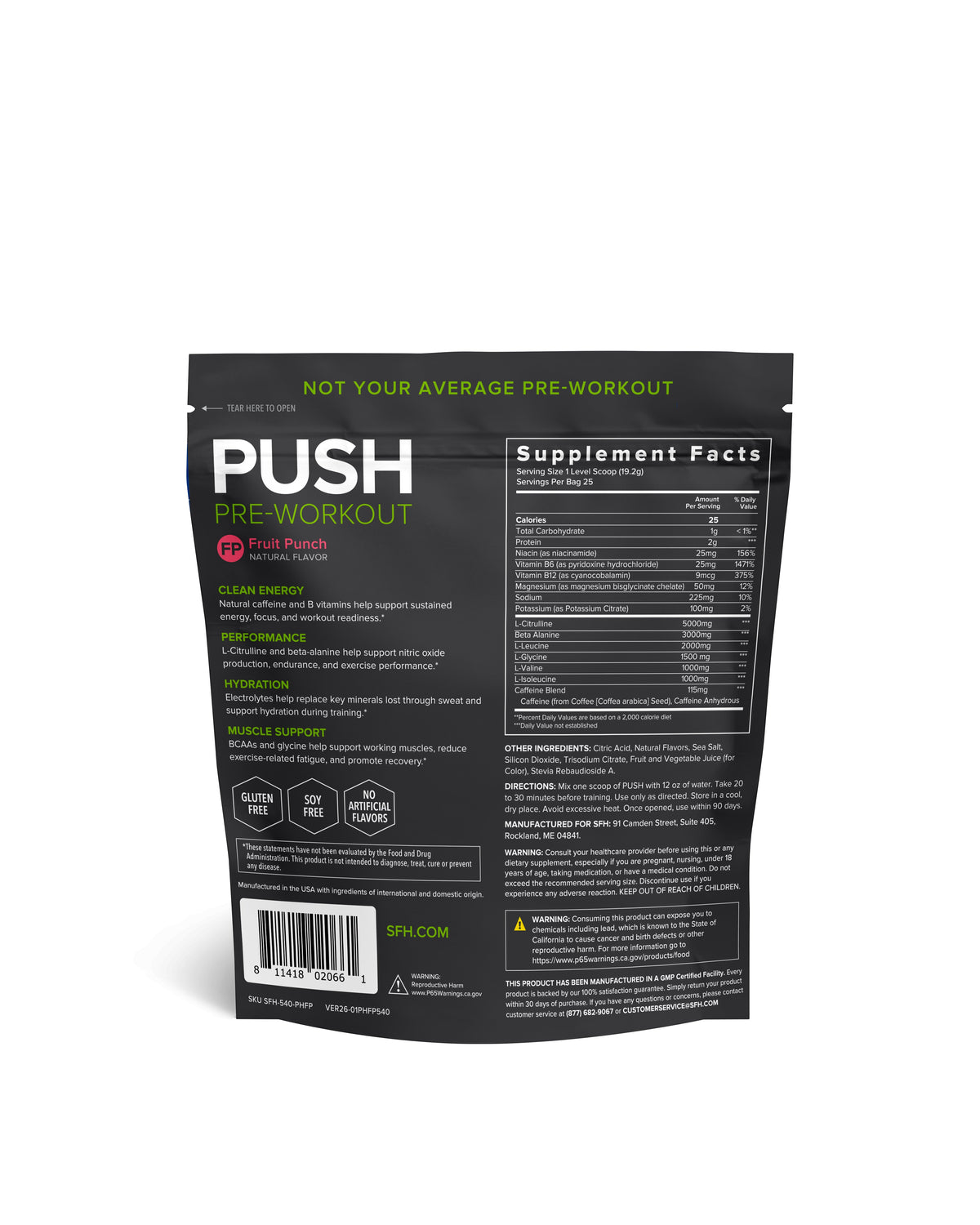
For example, SFH Push includes beta-alanine as part of its broader pre-workout formula, which illustrates how beta-alanine can be incorporated into a performance-focused product without treating it as the ingredient responsible for stimulant-like energy.
When comparing pre-workouts, it is more useful to consider the complete formula, serving sizes, and purpose of each ingredient than to judge the product by one ingredient alone.
Frequently Asked Questions
Can I take beta-alanine and creatine together?
Yes. They work through different physiological pathways and can be used together. Research suggests the combination may benefit some high-intensity performance measures, although it does not guarantee greater results for every goal.
Is beta-alanine better than creatine for muscle growth?
No. Creatine has substantially stronger evidence for supporting increases in lean body mass when combined with resistance training. Beta-alanine's potential contribution is more closely related to exercise performance.
Which is better for strength, beta-alanine or creatine?
Creatine generally has the stronger evidence for strength because it supports the phosphocreatine system involved in rapid ATP regeneration during high-intensity muscular contractions.
Does beta-alanine make you tingle?
Yes. Temporary tingling or prickling is a common effect of beta-alanine. Dividing the daily amount into smaller servings can make the sensation less noticeable.
Do beta-alanine and creatine need to be taken before a workout?
No. Both are primarily dependent on consistent supplementation rather than immediate pre-workout timing. Their effects develop as muscle carnosine or creatine stores increase.
Beta-Alanine vs Creatine: What’s the Difference?
Beta-alanine and creatine are both useful sports supplements, but they should not be viewed as interchangeable options. Beta-alanine increases muscle carnosine and supports buffering during demanding high-intensity exercise, while creatine increases phosphocreatine availability and supports rapid ATP regeneration. Those different mechanisms explain why each supplement tends to have its own strengths.
Creatine has the stronger overall evidence for strength, power, repeated high-intensity performance, and lean-mass gains alongside resistance training. Beta-alanine has a more specific role and may be particularly useful when training involves intense efforts lasting long enough for muscle buffering to become important. They can also be combined, although the evidence does not show that combining them automatically creates a greater benefit for every training goal.
The most sensible choice is therefore based on your training rather than the idea of an overall winner. If strength and muscle gain are your priorities, creatine deserves serious consideration. If your workouts involve repeated or sustained high-intensity efforts, beta-alanine may add something different. Understanding those differences makes it easier to build a supplement routine around your actual goals instead of simply following whichever ingredient happens to be most popular.

Leave a comment
This site is protected by hCaptcha and the hCaptcha Privacy Policy and Terms of Service apply.