


Creatine is one of the most popular supplements for improving strength and exercise performance, but concerns about hair loss have made some people hesitant to use it. The idea that creatine could cause thinning hair or accelerate baldness has circulated for years, particularly among men with a family history of hair loss. But how much truth is there to these claims? Does creatine cause hair loss, or is the connection being misunderstood? While creatine has well-established benefits for exercise performance, questions about its effects on hair deserve a closer look.
Understanding how creatine works, what might influence hair growth, and why some people experience thinning can help put these concerns into perspective. This article explores the possible relationship between creatine and hair loss, explains the role of DHT, and examines what current scientific evidence tells us about the safety of creatine monohydrate for your hair.
Does Creatine Cause Hair Loss? What Studies Actually Say
There is no convincing clinical evidence that creatine monohydrate causes hair loss. That is different from saying scientists have proved it could never happen. Research can tell us what was observed under particular conditions, not guarantee how every person's hair will respond over a lifetime.
For years, much of the discussion revolved around a single experiment that found a rise in dihydrotestosterone, or DHT, after creatine supplementation. DHT plays a role in hereditary pattern hair loss, which made the finding sound alarming. The problem was that the experiment measured blood hormone levels. It did not show participants shedding hair, developing bald spots, or experiencing a receding hairline.
Since then, researchers have examined the issue more directly. A 2025 randomized trial compared men taking creatine with men taking a placebo and measured several aspects of hair health. It found no statistically significant differences in the hair measurements between the groups over 12 weeks. That evidence is especially relevant because the researchers looked at the outcome people care about, rather than relying on a biological explanation.
The better question is whether people taking creatine have been shown to lose more hair than people who do not take it. So far, direct evidence has not shown that they do.
Does Creatine Increase DHT?
The creatine and baldness rumor can largely be traced to research published in 2009 involving college-aged rugby players. The investigators were studying changes in testosterone and DHT, not trying to determine whether creatine made anyone bald.
According to van der Merwe, 20 rugby players took part in a placebo-controlled crossover study. During the creatine condition, participants took 25 grams daily for seven days, then five grams daily for another 14 days. Their DHT levels rose by 56% after the loading period and remained 40% above baseline during the maintenance period. Total testosterone did not change significantly.
But there are several reasons not to treat them as proof of hair loss. The study lasted only three weeks, involved only 20 players, and did not measure hair density, follicle health, or shedding. The reported DHT concentrations also remained within the normal physiological range.
A 2021 scientific review discussed research on creatine and androgen-related hormones. According to that review, ten of twelve other studies found no change in total testosterone, and five studies measuring free testosterone found no increase. The authors concluded that existing evidence did not support claims that creatine causes baldness.
One result suggested a question worth investigating; it did not settle the answer. And even if creatine did change DHT in some circumstances, researchers would still need to demonstrate that the change affected hair follicles in a meaningful way.
How Does DHT Affect Hair Loss and Male Pattern Baldness?
DHT is made when the enzyme 5-alpha-reductase converts testosterone into a more potent androgen. It is involved in several normal biological processes, but it can also contribute to androgenetic alopecia, the medical term for hereditary pattern hair loss.
In people with genetically sensitive scalp follicles, androgen activity can gradually cause those follicles to produce shorter, finer hairs. Over time, the change may become noticeable as a receding hairline, widening part, or thinning at the crown. However, people do not all respond to DHT in the same way. Someone with a strong inherited susceptibility may experience pattern hair loss even when their circulating hormone levels are not unusually high.
Measuring DHT in the bloodstream is not the same as measuring what is happening at the scalp. Hormone concentrations, individual follicle sensitivity, family history, and hair growth cycles are related but distinct pieces of the picture.
If you have a family history of baldness and notice changes, it makes sense to take them seriously. But genetics already provides a plausible explanation that needs consideration independently of creatine. A dermatologist can examine the pattern and help identify what is happening instead of relying on guesses about hormones.
What Does Research Say About Creatine and Hair Loss?
For anyone worried about their hairline, the most useful development has been a study that examined hair itself. Published in 2025, it was designed to investigate a question that earlier hormone studies could not answer directly.
According to Lak and colleagues, researchers recruited 45 resistance-trained men aged 18 to 40 and randomly assigned them to take either five grams of creatine monohydrate or a placebo daily. The trial lasted 12 weeks, and 38 participants completed it. Alongside blood hormone measurements, researchers assessed hair density, follicular unit count, and cumulative hair thickness.
The researchers found no statistically significant differences between groups in DHT or the hair characteristics they measured. In plain language, the men taking creatine did not show detectable worsening of hair density or thickness compared with those taking placebo during the study period.
It also challenges the assumption that a standard daily creatine dose necessarily raises DHT or accelerates thinning.
Still, there are limits. Thirty-eight people completed the trial, which is not a large sample. It followed participants for three months, whereas hereditary pattern hair loss can develop over years. The participants were men who already resistance-trained, so the results cannot automatically be extended to women or every person with established pattern baldness.
The study also tested five grams daily without a loading phase. It does not resolve every question about higher short-term doses or decades of use. What it does provide is direct, controlled evidence that creatine did not worsen the measured hair outcomes under those conditions.
The best interpretation is that current studies have not established a link, while larger and longer trials could help clarify the remaining uncertainties.
Can Creatine Cause Hair Thinning If Baldness Runs in Your Family?
If your father, mother, or grandparents experienced pattern thinning, you may be especially alert to changes around your temples or crown. But family history does not mean creatine has been shown to trigger the process.
Hereditary pattern hair loss involves genetic susceptibility and the way follicles respond to androgens. The studies currently available do not demonstrate that taking creatine starts or speeds up that process in people who are genetically predisposed. At the same time, research specifically following that group for several years remains limited, so nobody can promise an individual outcome.
If you are concerned, look beyond whether your hair appears different after one workout or shower. Notice whether the change is gradual or sudden, whether it follows a recognizable pattern, and whether other symptoms are present. Taking photographs under similar lighting over time can help you describe changes to a clinician, but they are not a substitute for an assessment.
Starting creatine in the same month you notice a receding hairline does not, by itself, establish cause and effect.
What Else Causes Hair Shedding After Starting Creatine?
Starting creatine often happens alongside other lifestyle changes. Someone may begin lifting more frequently, cut calories to lose weight, change their diet, or recover from a stressful few months. When extra shedding appears, the newest supplement is an easy suspect, even if the real trigger came earlier.
According to the American Academy of Dermatology, shedding roughly 50 to 100 hairs a day is normal. Excessive shedding can occur after significant stress, illness, surgery, childbirth, or substantial weight loss. Sometimes it becomes noticeable months after the triggering event.
Other potential contributors include hereditary pattern hair loss, nutritional deficiencies, thyroid conditions, some medications, and scalp disorders. Widespread shedding, gradual thinning near the crown, and sudden circular patches are not necessarily caused by the same thing.
If your hair is changing noticeably, if there is scalp redness, pain, patchiness, or persistent shedding, talk to a dermatologist or another qualified healthcare professional. Stopping a supplement without investigating anything else may leave the actual problem unaddressed.
Is Creatine Monohydrate Safe to Take if You're Worried About Hair Loss?
For healthy adults, creatine monohydrate is among the best-studied sports supplements. It can support performance during repeated high-intensity exercise, particularly alongside resistance training. But whether to use it is a personal decision, and you do not need to force yourself to take a supplement that makes you uneasy.
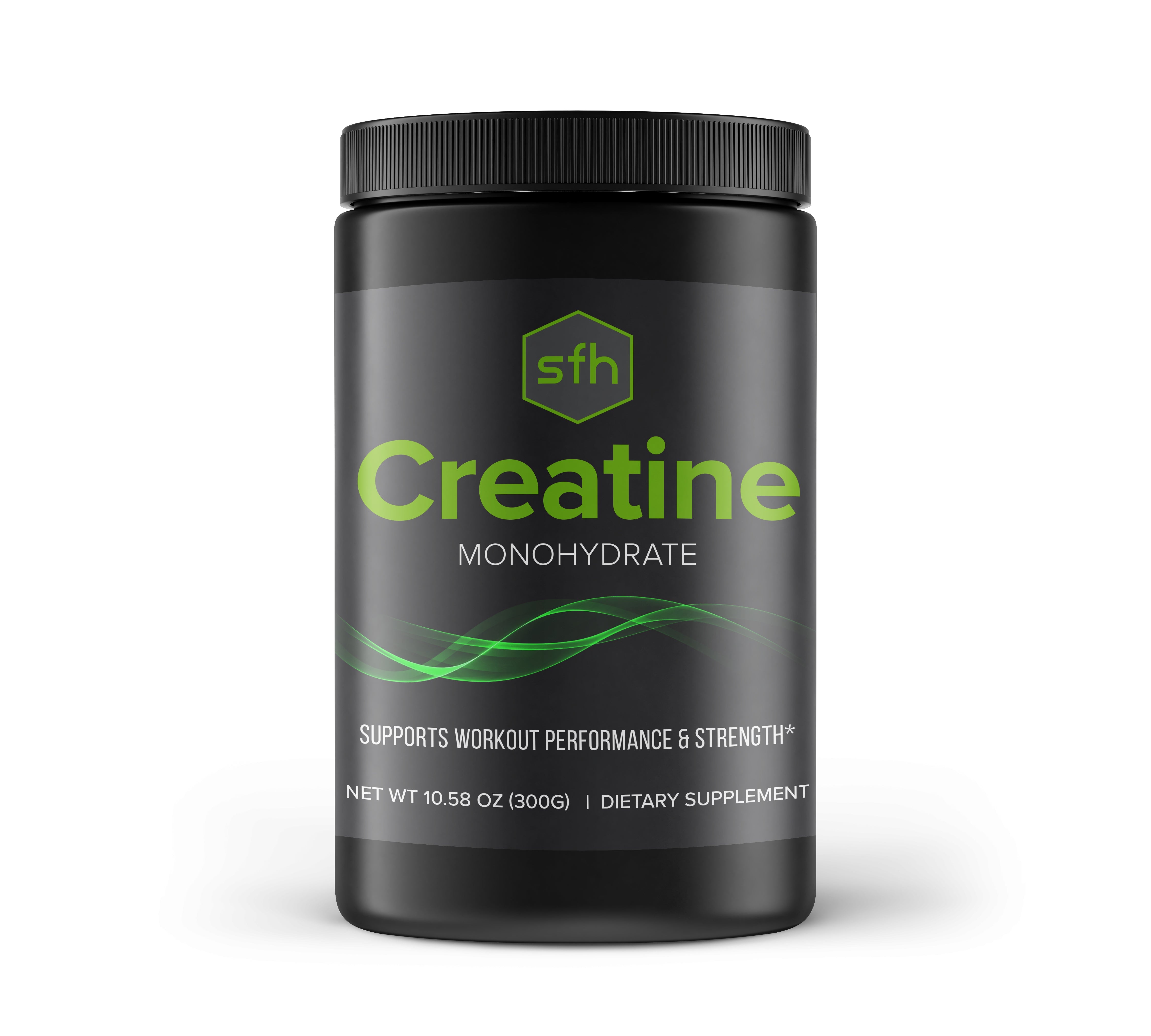
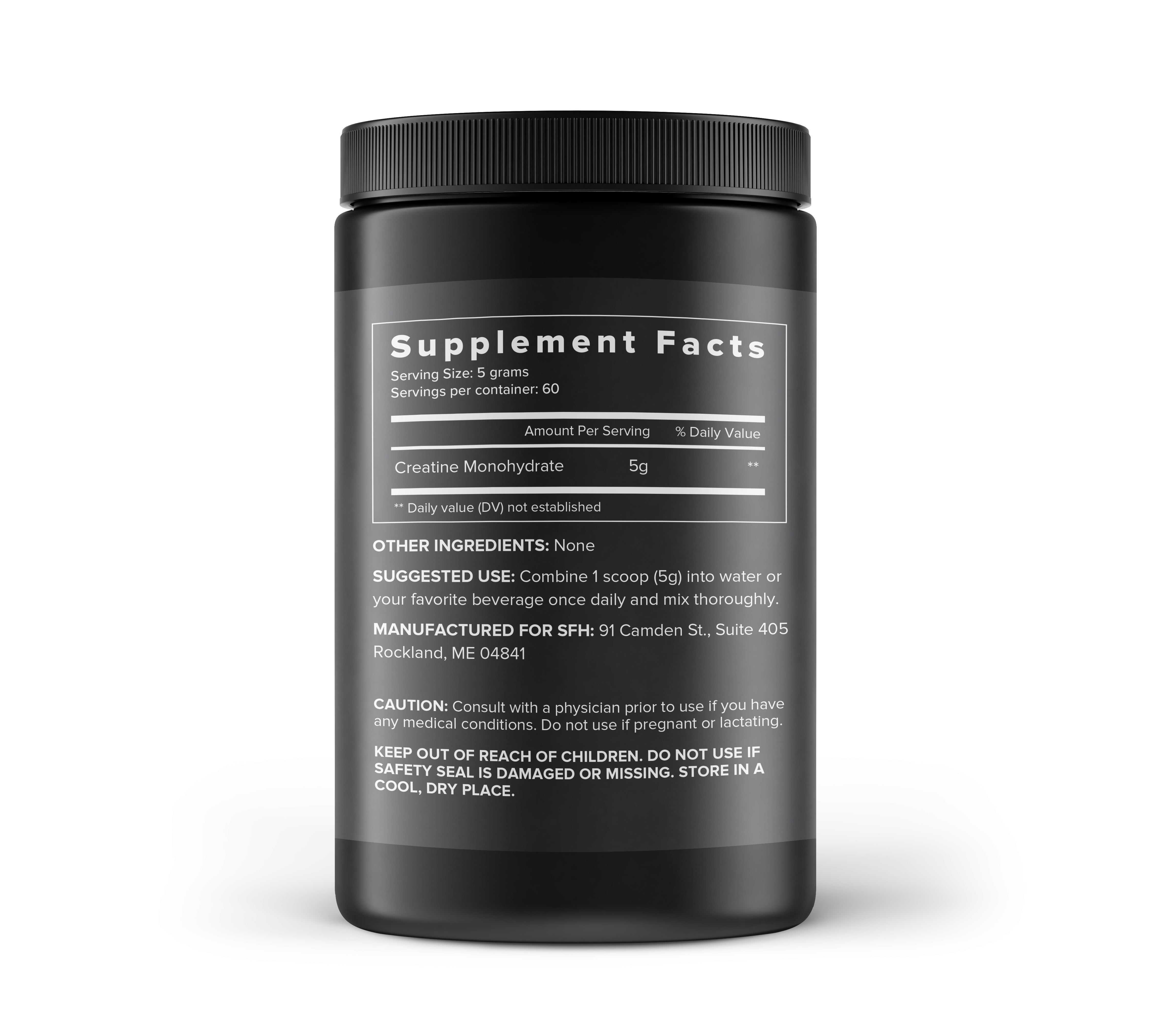
If you decide it fits your goals, a straightforward creatine monohydrate product is easier to evaluate than a blend making dramatic promises. SFH Creatine Monohydrate is an unflavored, micronized powder that can be mixed into water or another drink. It is not specifically proven to prevent hair loss, and there is no basis for claiming it offers special protection for your follicles.
If you already have hair changes, do not ignore them simply because the creatine research is reassuring. You can discuss supplement use and your concerns with a clinician, especially if you have a health condition or take medications. Evidence should help you make a decision, not make you dismiss something happening to your body.
Frequently Asked Questions
Does creatine make you bald?
Current clinical research has not shown that creatine causes baldness. The older concern came from a study measuring DHT, while a newer trial measuring hair found no significant worsening over 12 weeks.
Does creatine increase DHT levels?
One small study reported an increase after creatine loading. The result has not been consistently supported by other research, and a 2025 trial found no significant difference in DHT between creatine and placebo.
Does creatine cause hair loss in women?
There is no convincing evidence showing that creatine causes hair loss in women. However, the recent trial that directly measured hair included only men, so female-specific evidence remains limited.
Will stopping creatine make my hair grow back?
There is no established creatine-specific regrowth timeline because creatine-induced hair loss has not been demonstrated. Whether hair regrows depends on the actual cause of the thinning or shedding.
Can I take five grams of creatine daily without losing hair?
In the 2025 clinical trial, five grams daily did not significantly worsen measured hair characteristics over 12 weeks. That is reassuring but not an individual guarantee. Seek medical advice if you notice ongoing changes.
Does Creatine Cause Hair Loss? The Bottom Line
The idea that creatine causes hair loss has lasted far longer than the evidence supporting it. Much of the concern comes from a small 2009 study that found an increase in DHT but never examined participants' hair. When a 2025 randomized trial measured hair density and thickness directly, it found no significant differences between men taking creatine and those receiving placebo over 12 weeks.
That does not mean every question is answered. We need more research involving women, people with hereditary thinning, and longer periods of use. But there is no convincing clinical evidence that creatine monohydrate causes baldness.
If your hair seems thinner, take the change seriously without assuming you know the cause. Stress, genetics, illness, and nutritional factors can all play a role. A qualified clinician can help you work out what is happening. Make an informed choice without letting an old hormone finding decide everything for you.


Leave a comment
This site is protected by hCaptcha and the hCaptcha Privacy Policy and Terms of Service apply.