

L-citrulline is an amino acid that has become a popular ingredient in pre-workout formulas because of its relationship with blood flow and nitric oxide. After you consume it, your body can use L-citrulline to increase the availability of L-arginine, which is involved in nitric oxide production. Nitric oxide helps regulate blood vessel relaxation, making L-citrulline interesting for people who want to support exercise performance and the familiar muscle pump during workouts.
But what does L-citrulline actually do, and how much of its reputation is supported by research? L-citrulline has a clear biological role, but studies do not show identical results for every type of exercise. This guide explains how L-citrulline works, what research says about blood flow and performance, how much people commonly use, when to take it, how it compares with related supplements, and what to consider before adding it to your routine in practical everyday training decisions too.
What Is L-Citrulline and Why Is It Used?
Citrulline participates in the urea cycle and can be converted into L-arginine. L-arginine is the substrate used by nitric oxide synthase to produce nitric oxide. That connection gives L-citrulline a useful place today in discussions about circulation and physical exercise performance.
A review published in Current Opinion in Clinical Nutrition and Metabolic Care explains that L-citrulline can increase L-arginine availability and nitric oxide synthesis. The review also notes that oral L-citrulline can be more effective than oral L-arginine at raising circulating arginine because it avoids some of the extensive first-pass metabolism that limits oral arginine.
That simply explains why researchers and supplement manufacturers have been interested in it.
How Does L-Citrulline Support Nitric Oxide?
To understand what L-citrulline does, it helps to follow the pathway rather than treating nitric oxide as a vague “pump” ingredient.
After L-citrulline is absorbed, it can be converted into L-arginine. Nitric oxide synthase then uses L-arginine to produce nitric oxide. Nitric oxide acts as a signaling molecule that can promote relaxation of vascular smooth muscle. This supports vasodilation and helps regulate blood flow.
A review in Acta Physiologica describes citrulline as a preferred precursor for nitric oxide production because it has high intestinal absorption, low first-pass metabolism, and high renal reabsorption compared with arginine.
Source: https://pubmed.ncbi.nlm.nih.gov/33089645/
This pathway is important, but it should not be confused with an instant guarantee of better circulation. Human responses depend on the amount consumed, the person's health and training status, and the outcome being measured.
Does L-Citrulline Increase Blood Flow?
Research suggests that L-citrulline can influence vascular function, which helps explain its popularity in pre-workout supplements.
A meta-analysis published in the British Journal of Nutrition included 17 randomized controlled trials involving L-citrulline supplementation. The researchers found that longer-term L-citrulline supplementation improved brachial artery flow-mediated dilation by 0.9 percentage points, while no post-meal effects on vascular function markers were found.
More recent evidence points in a similar direction for some populations. A systematic review and meta-analysis published in 2025 included eight randomized controlled trials with 176 middle-aged and older adults. L-citrulline significantly improved flow-mediated dilation, although it did not significantly improve pulse wave velocity overall.
Why Is L-Citrulline Popular Before a Workout?
Pre-workout supplements are often designed around several different ingredients, with each one serving a particular purpose. Caffeine may support alertness, beta-alanine is used to increase muscle carnosine, and L-citrulline is included because of its relationship with nitric oxide and vascular function.
During exercise, working muscles demand oxygen and nutrients, while blood flow and vascular regulation become important. That gives an ingredient involved in the nitric oxide pathway a logical place in a performance-oriented formula.
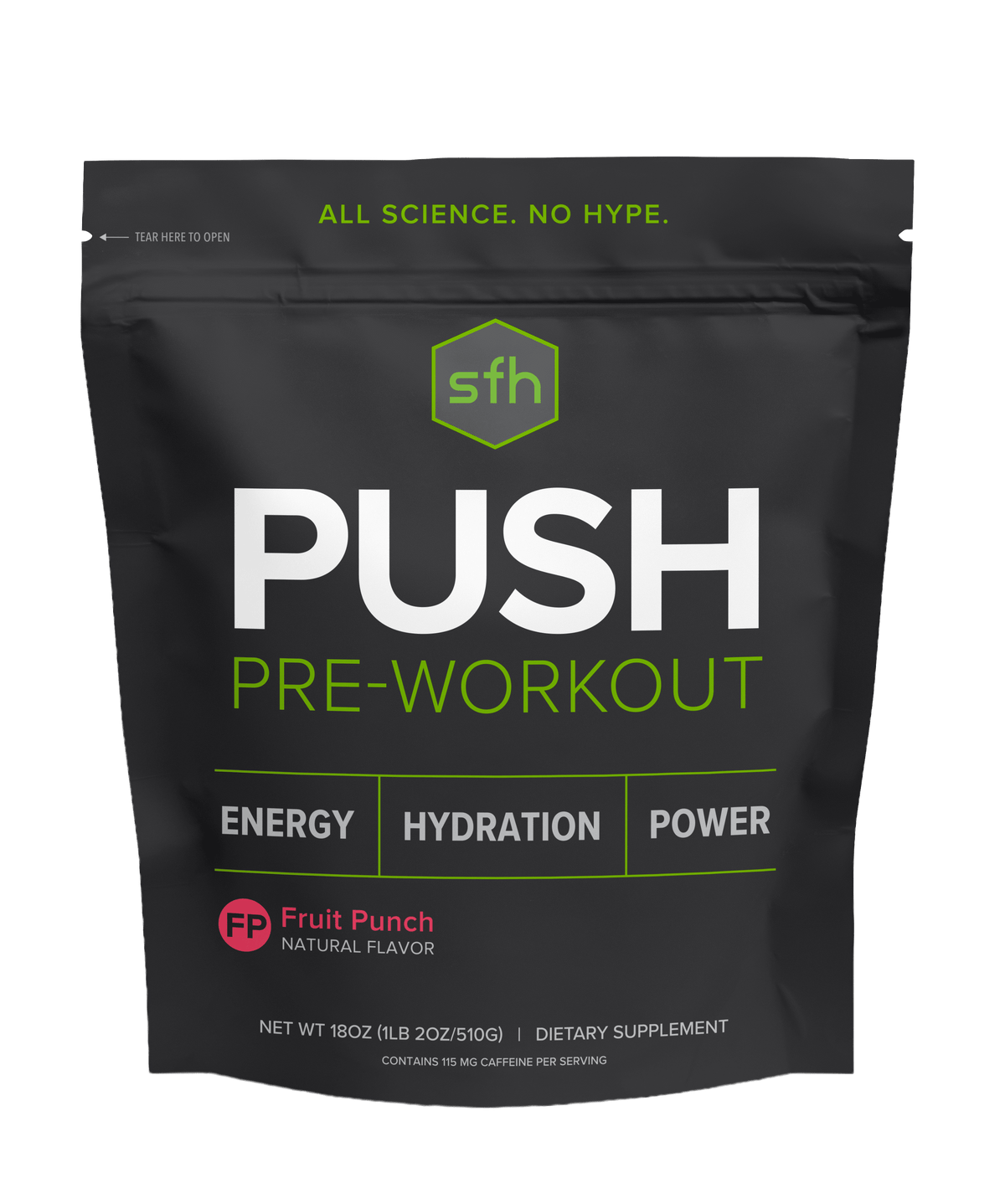
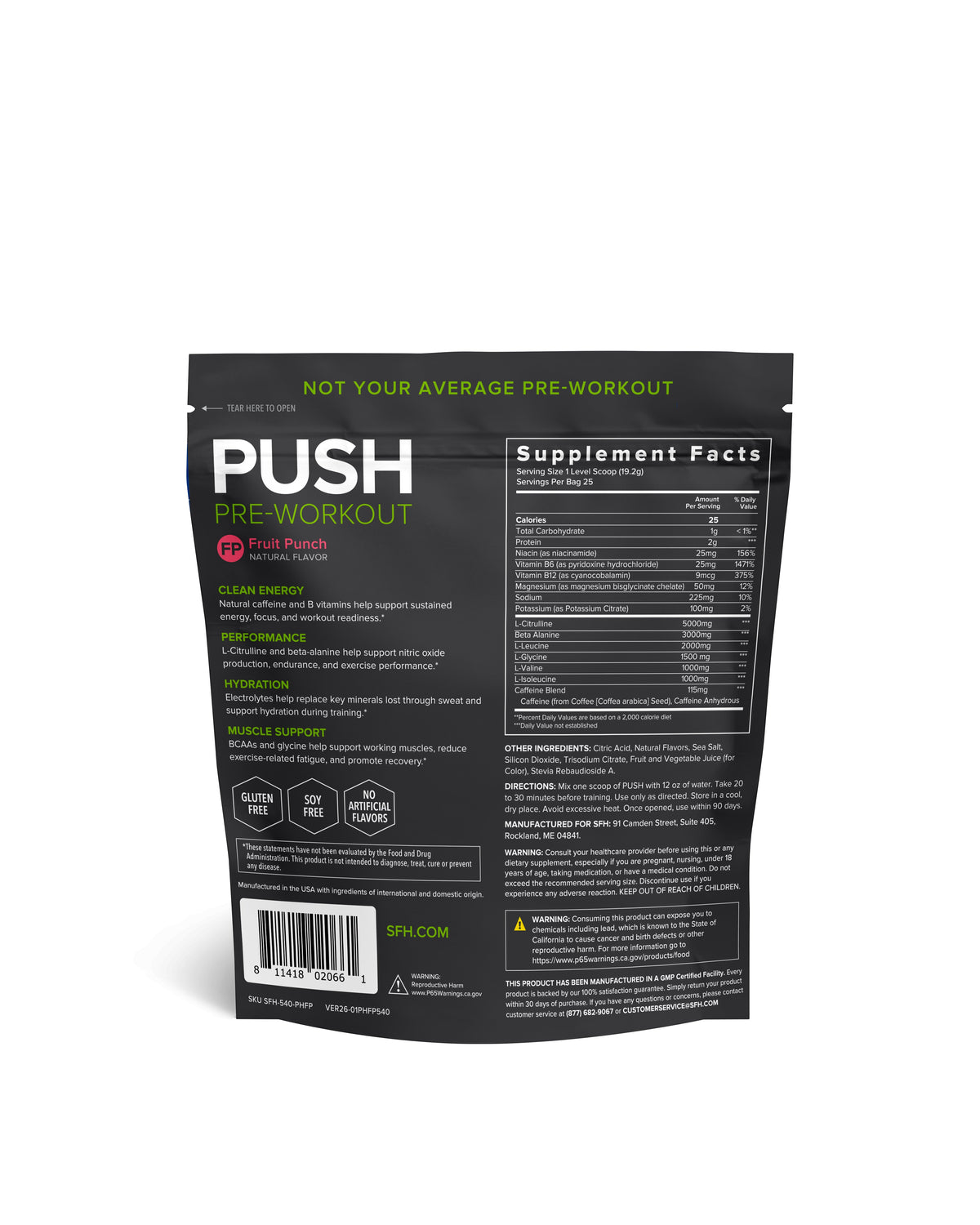
For example, SFH Push includes 5 grams of L-citrulline alongside beta-alanine, caffeine, BCAAs, glycine, and electrolytes. In that context, L-citrulline is one component of a broader pre-workout formula rather than the sole reason someone might choose it.
Does L-Citrulline Improve Exercise Performance?
This is where the evidence becomes more complicated. L-citrulline has a convincing biological rationale, but exercise performance studies do not consistently produce the same results.
A 2023 systematic review and meta-analysis examined nine studies involving 158 young, healthy adults and found no significant improvement in time to exhaustion or time to completion following acute citrulline supplementation.
Resistance exercise research is also mixed. A 2023 crossover study gave recreationally resistance-trained men and women 8 grams of L-citrulline one hour before exercise. Under those conditions, researchers found no significant improvement in force, barbell velocity, power, repetitions, or muscle oxygenation.
Other studies have reported benefits in specific resistance-training settings. Results can depend on the exercise, participant, protocol, and outcome measured.
Can L-Citrulline Give You a Better Muscle Pump?
The muscle pump is probably one of the most recognizable reasons people associate L-citrulline with pre-workout.
During resistance training, repeated contractions can temporarily increase blood and fluid within working muscles. That creates the fuller feeling people commonly call a pump.
Because L-citrulline supports the L-arginine and nitric oxide pathway, it has a plausible connection to this process. However, a noticeable pump is not the same thing as proven muscle growth.
Your pump can also change with exercise selection, repetitions, rest periods, hydration, and carbohydrate intake. L-citrulline may contribute to blood-flow conditions, but the subjective feeling should not be used as a scorecard for supplement effectiveness.
How Much L-Citrulline Should You Take?
There is no single dose that applies to every person, and research has used different amounts and protocols. Exercise studies commonly investigate several-gram doses, while vascular research may use different schedules over longer periods.
A review of vasoactive nutrients reported that isolated L-citrulline intake of at least 5.6 grams showed effects on endothelial function in the literature it assessed, although that type of evidence should not be treated as a universal dosing recommendation.
When using a commercial product, follow its serving instructions rather than trying to recreate a study dose without considering the formulation. Pure L-citrulline amount matters when comparing products.
When Should You Take L-Citrulline?
If L-citrulline is included in a pre-workout, it is commonly consumed before exercise because many studies have investigated acute pre-exercise supplementation. That makes a pre-workout serving a convenient way to include it in a training routine.
Not every study uses a single dose immediately before exercise. Longer supplementation protocols are also used for vascular outcomes. L-citrulline does not need to create a noticeable sensation to be biologically active.
L-Citrulline vs Citrulline Malate: What Is the Difference?
L-citrulline and citrulline malate are related but not identical ingredients.
L-citrulline is the amino acid itself. Citrulline malate combines citrulline with malic acid. Therefore, the total weight listed for citrulline malate does not necessarily equal the amount of pure L-citrulline.
Always check the Supplement Facts panel and the manufacturer's description when comparing products. Two pre-workouts can list similar citrulline numbers while providing different amounts of the amino acid.
L-Citrulline vs L-Arginine
L-citrulline and L-arginine are closely related because both are connected to nitric oxide production.
L-arginine is directly used by nitric oxide synthase to produce nitric oxide. L-citrulline, meanwhile, can be converted into L-arginine. Oral L-citrulline may therefore be an efficient way to increase circulating arginine because it is less affected by intestinal and hepatic first-pass metabolism.
Research published in Acta Physiologica concluded that citrulline has greater availability as a nitric oxide precursor than arginine because of its absorption and metabolism characteristics.
That does not mean L-citrulline is universally superior for every purpose. It simply explains why citrulline has become a popular alternative to direct arginine supplementation.
Is L-Citrulline Safe?
L-citrulline has been investigated in human studies, but safety should still be considered carefully.
A systematic review and meta-analysis of five clinical interventions found no significant overall effect of L-citrulline supplementation on brachial or aortic blood pressure, showing why broad claims about lowering blood pressure should be made carefully.
If you take blood-pressure medication, use medicines that affect vascular function, are pregnant, or have a cardiovascular condition, talk with a healthcare professional before using concentrated L-citrulline.
Frequently Asked Questions
What does L-citrulline do before a workout?
L-citrulline can increase L-arginine availability and support the nitric oxide pathway. This may influence vascular function and blood flow, which is why L-citrulline is commonly included in pre-workout formulas.
Does L-citrulline increase nitric oxide?
L-citrulline supports nitric oxide production indirectly by increasing the availability of L-arginine, which nitric oxide synthase uses to produce nitric oxide. The actual response can vary between individuals and circumstances.
Does L-citrulline help build muscle?
L-citrulline is not a direct muscle-building supplement. It may support factors related to exercise performance or blood flow, but muscle growth primarily depends on progressive resistance training, adequate nutrition, recovery, and sufficient protein.
How long does L-citrulline take to work?
There is no single time point that applies to every use. Acute exercise studies commonly administer L-citrulline before training, while other research uses longer supplementation periods to examine vascular outcomes.
Is L-citrulline better than L-arginine?
L-citrulline can raise circulating L-arginine efficiently because it is absorbed and metabolized differently from oral arginine. Whether it is preferable depends on the purpose, formulation, and individual circumstances.
What Does L-Citrulline Do?
L-citrulline's main role in sports nutrition comes from its relationship with L-arginine, nitric oxide, and vascular function. The body can convert L-citrulline into L-arginine, which provides substrate for nitric oxide production. Nitric oxide then participates in signaling that helps regulate blood vessel relaxation and blood flow.
That biological pathway explains why L-citrulline is popular in pre-workout formulas and why people often associate it with the muscle pump. However, the research does not support a blanket promise that L-citrulline will improve every workout. Studies have produced mixed results, especially when researchers examine endurance, strength, repetitions, or other performance outcomes.
The most sensible way to view L-citrulline is as a targeted supplement ingredient with a plausible mechanism and evidence that varies by outcome. Check the form, serving size, complete formula, and your own circumstances rather than judging it by marketing claims alone. For healthy adults who choose to use it, L-citrulline can be one part of a broader approach to exercise nutrition, alongside consistent training, adequate food, hydration, and recovery.


Leave a comment
This site is protected by hCaptcha and the hCaptcha Privacy Policy and Terms of Service apply.